Guia Completo para Kitesurf em Tavira
Se há um lugar no Algarve onde eu realmente adoro fazer kitesurf, é Tavira. Entre as praias largas, a lagoa calma da Ria Formosa e a atmosfera descontraída da cidade, esta zona oferece uma combinação perfeita de natureza, vento e espaço para navegar.
Ao longo dos anos, descobri que Tavira não é apenas bonita — é também um lugar incrível para aprender e evoluir no kitesurf.
Porque Adoro Fazer Kitesurf em Tavira
O que torna Tavira especial é a sua geografia única. A orientação da linha de costa e o Efeito Coriolis fazem com que a Ilha de Cabanas de Tavira, mesmo ao lado de Tavira, seja um spot perfeito para vento side-onshore, muito estável (sem rajadas) e normalmente não muito forte, criando um mar com água relativamente lisa (“flat water”), pouca ondulação e muito espaço para praticar.
Estas condições tornam a zona especialmente amigável para iniciantes e para qualquer pessoa que queira melhorar a técnica ou experimentar novas manobras e truques.
O Principal Spot de Kitesurf: Cabanas de Tavira
A maioria das minhas sessões acontece na Ilha de Cabanas de Tavira, na área de 300 metros reservada para aulas e prática de kitesurf da Eolis. Para chegar lá, normalmente apanha-se um pequeno barco através da lagoa e depois caminha-se pela praia até chegar à zona de kitesurf.
Quando chegares, vais encontrar uma praia longa de areia e, do lado Este, vais ver a cabana e o spot da Eolis. Podes simplesmente juntar-te a nós lá e ajudamos-te com tudo o que precisares — desde levantar o kite, navegar em segurança e aterrar o kite.
O ambiente é limpo, natural e longe de multidões, tanto na água como em terra — não há outros utilizadores da praia a apanhar sol ou a nadar, como acontece em muitos outros destinos de kitesurf.
Para manter tudo seguro desta forma, a única coisa que pedimos é que ajas com responsabilidade e dês prioridade aos nossos alunos e iniciantes na água. Se já navegas bem, provavelmente consegues subir ao vento, por isso tenta manter-te sempre a barlavento deles.
Aprender Kitesurf em Tavira
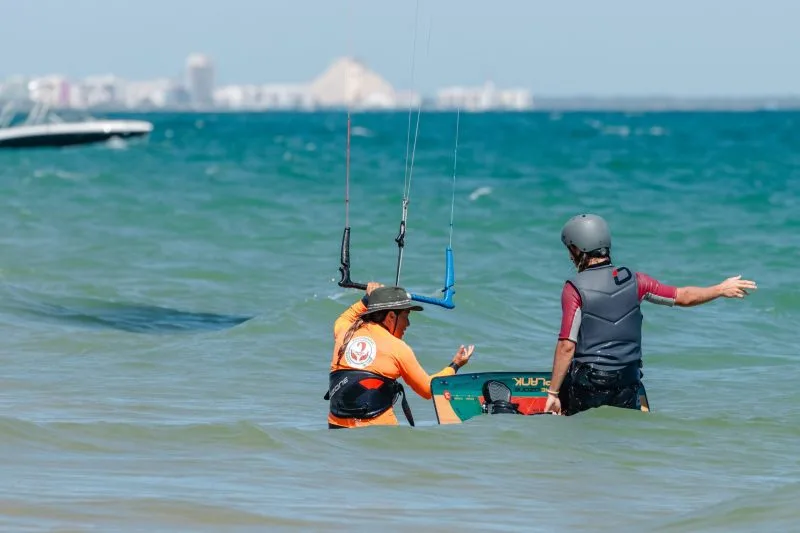
Se estás a começar do zero, Tavira é honestamente um dos melhores lugares do mundo para aprender.
A progressão típica de aprendizagem começa com uma sessão teórica em terra, onde aprendes a montar o kite, compreender a janela de vento e controlar o kite em segurança. Depois disso, as aulas passam para a água — primeiro sem prancha e depois com prancha.
Pela nossa experiência, a maioria dos iniciantes precisa de cerca de 3 a 5 aulas antes de conseguir fazer os primeiros metros a navegar na prancha.
A água pouco profunda, o vento consistente e não muito forte, e os instrutores da Eolis com 21 anos de experiência a ensinar, ajudam realmente a acelerar o processo de aprendizagem.
Convidamos-te também a ler o feedback dos nossos alunos e clientes online em diferentes plataformas.
Vento e Melhor Época
A principal época de kitesurf em Tavira normalmente vai da primavera até ao início do outono, quando os ventos são mais fiáveis. Muitos dias trazem vento suave e constante que permite navegar confortavelmente sem rajadas.
As tardes de verão são especialmente boas graças aos ventos térmicos, que normalmente começam por volta da hora de almoço e continuam até perto do pôr do sol.
Um dos grandes mitos que os iniciantes têm é que é preciso vento forte para fazer kitesurf e que é preciso ter muita força nos braços. Nenhuma dessas coisas é verdade.
O melhor vento para aprender é entre 11 e 16 nós (cerca de 20 a 30 km/h), porque é previsível e dá tempo para cometer erros sem perder o controlo.
Além disso, não se usa a força dos braços para puxar a barra — usa-se a força da gravidade e o peso do próprio corpo.
E é exatamente por isso que queremos ajudar também os nossos BRAVOS 60+ (60 ou mais anos) a aceitarem um novo desafio.
O Que Trazer Para Uma Sessão
Para a maioria das sessões em Tavira normalmente vais precisar de:
- Um kite de 11–17 m, dependendo da intensidade do vento
- Uma prancha twin-tip
- Um fato de neoprene completo (fora do pico do verão)
A temperatura da água é confortável no verão, mas por razões de segurança (hipotermia e flutuação) ainda aconselhamos usar pelo menos um fato shorty para sessões mais longas.
Sabias que, mesmo em água a 25 °C, o corpo humano perde calor mais rápido na água do que no ar (cerca de 20–25 vezes mais rápido)? Por isso, ficar muito tempo na água sem fato de neoprene pode eventualmente levar à perda de temperatura corporal e até hipotermia em exposições prolongadas. 🌊
Tempo aproximado sem fato de neoprene em água a 25 °C
Para um adulto médio e saudável:
30–60 minutos: geralmente confortável para a maioria das pessoas
1–2 horas: pode começar a haver perda significativa de calor corporal
2–3+ horas: risco real de arrefecimento do corpo, especialmente se houver vento, fadiga ou pouca gordura corporal
Dicas da Minha Experiência
Algumas coisas simples ajudam sempre a tirar o máximo partido de uma sessão:
- Verificar a previsão do vento antes de atravessar para a ilha (podes enviar-nos uma mensagem e ajudamos com isso)
- Trazer água e alguns snacks, porque as instalações não ficam muito perto
- Respeitar as áreas do Parque Natural da Ria Formosa
- Se vires lixo a flutuar, apanha-o enquanto navegas
- Mantém-te na zona designada para kitesurf e evita navegar demasiado perto de nadadores ou barcos
- Navegar ao longo da costa da Ilha de Cabanas é incrível, mas mantém-te afastado da margem, para além das boias amarelas que marcam a zona de banhos
São coisas simples — mas fazem uma grande diferença.
Considerações Finais
Para mim, fazer kitesurf em Tavira é muito mais do que apenas o desporto. É a combinação de vento, natureza e a atmosfera tranquila e familiar do spot que torna cada sessão memorável.
Sejas um iniciante completo ou já navegues com confiança, Tavira oferece uma das experiências de kitesurf mais agradáveis do sul de Portugal.
E quando terminares a sessão, não há nada melhor do que relaxar na areia quente a olhar para o mar — onde às vezes até é possível ver golfinhos — já a pensar no próximo dia de vento.
Se quiseres, também posso:
- melhorar o texto para SEO (muito importante para aparecer no Google)
- corrigir ligeiramente o inglês original para soar mais profissional
- ou transformar isto num artigo otimizado de 1500–2000 palavras para blog (que rankeia muito melhor).
If there’s one place in the Algarve where I truly love to kitesurf, it’s Tavira. Between the wide beaches, the calm lagoon of the Ria Formosa and the relaxed atmosphere of the town, this area offers a perfect mix of nature, wind and space to ride.
Over the years, I’ve discovered that Tavira is not only beautiful — it’s also an incredible place to learn and progress in kitesurfing.
Why I Love Kitesurfing in Tavira
What makes Tavira special is its unique geography. The orientation of the coastline and the Coriolis Effect make Cabanas de Tavira’s Island just becides Tavira the most perfect spot for side-on-shore wind, super steady (NO GUSTS) and normally not very strong, creating a “flat-water” sea with very little chop and lots of space to practice. These conditions make the area especially friendly for beginners and for anyone who wants to improve technique or try new skills and tricks.
The Main Kitesurf Spot: Cabanas de Tavira
Most of my sessions happen in the island of Cabanas de Tavira at Eolis 300m area reserved for Kitesurfing lessons and practice. To get there, you usually take a small boat across the lagoon and walk along the beach until you reach the kitesurfing area.
Once you arrive, you’ll find a long sandy beach and on the East side you will see Eolis Cabin and spot. You can simply join us over there and we will help you with anything you might need from launching, to riding safely and landing your kite. The environment is clean, natural and far from crowded both in the water and in land. — no other beach users sunbathing or in the water as it happens in many other kite destinations.
To keep it safe like this, the only thing we ask you is to act responsibly and give way to our students and beginners in the water. If you are already riding you can probably ride upwind so try staying always upwind from them.
Learning Kitesurf in Tavira
If you’re starting from zero, Tavira is honestly one of the best places to learn in the world.
A typical learning progression usually begins with a theory session on land where you learn how to set up the kite, understand the wind window and control the kite safely. After that, the lessons move into the water — first without the board and then with it.
From our experience, most beginners need around 3 to 5 lessons before riding their first meters on the board.
The shallow water, consistent not very strong wind and Eolis instructors with 21 years of teaching experience, really help speed up the learning process. We invite you to read our guests/custommers feedback online on different platforms:
Wind and Best Season
The main kitesurfing season around Tavira usually runs from spring through beginning of autumn, when winds are more reliable. Many days bring smooth, steady winds that make it possible to ride comfortably without gusts.
Summer afternoons are especially good thanks to thermal winds, which often pick up around lunch time and stop later in the day close to sunset.
Some of the big miths beginners have is that you need strong wind to kite and you yourself need to be strong in the arms: Neither are true!
The best wind to learn is from 11 to 16 knots (around 20 to 30km/h) in force so that it is predictable, gives you time to make mistakes without loosing control; And you don’t use force of your arms to pull the bar, you use the gravity force and your body weight. And that’s exactly why we want to help our BRAVE 60+ (years old) to accept a new challenge.
What to Bring for a Session
For most sessions in Tavira you will typically need:
- A 11–17m kite depending on wind strength
- A twin-tip board
- A full wetsuit (outside peak summer)
Water temperatures are comfortable in summer, but for safety reasons (hypothermia and flotation)we still advise you to have at least a shorty wetsuit for longer sessions. Did you know the Even in 25 °C water, the human body loses heat faster in water than in air (about 20–25× faster). Because of this, staying in the water for long periods without a wetsuit can eventually lead to a drop in body temperature and even hypothermia during prolonged exposure. 🌊
Approximate time without a wetsuit in 25 °C water
For an average, healthy adult:
30–60 minutes: generally comfortable for most people
1–2 hours: noticeable loss of body heat may begin
2–3+ hours: real risk of body cooling, especially if there is wind, fatigue, or low body fat
Tips from My Experience
A few things always help make the most of a session:
- Check the wind forecast before crossing to the island (you can send us a message and we will help with that)
- Bring water and snacks since the facilities are not very near-by
- Respect the natural park areas of the Ria Formosa. If you see trash floating, pick it up while riding.
- Stay in the Kitesurf designated area and avoid riding too close to swimmers or boats
- Riding along the coast of Cabanas Island is super nice but stay away from shore, after the yellow buoys in the water marking the bathing areas
Simple things — but they make a big difference.
Final Thoughts
For me, kitesurfing in Tavira is about more than just the sport. It’s the combination of wind, nature and the peaceful and family atmosphere of the spot that makes every session memorable.
Whether you’re a complete beginner or already riding confidently, Tavira offers one of the most enjoyable kitesurfing experiences in southern Portugal.
And once you finish your session, there’s nothing better than relaxing in the warm sand looking at the sea where sometimes you can spot some dolphins — already thinking about the next windy day.